
Analog and Technology
Systems Thinking and Easter Egg Hunts

My word for 2026 - generative - has several meanings. I want to resist my degenerative disease, mentor and support the next generation, and make things with my hands. I’m not the only one who is making a conscious effort to unplug from technology and embrace analog. According to the internet, 2026 is the year of “going analog.” In an article titled, “Analog is back, and my millennial heart couldn’t be happier,” Tayo Bero writes, “. . . the arts and crafts company Michael’s said that searches for “analog hobbies” on its site have gone up 136% in the last six months, while Google Trends suggests a 160% increase in searches for the same term.”
I’ve never completely left the analog world. I journal by hand, read physical books, and use Washi tape to decorate my to do lists. I love good pens, fancy notebooks, jigsaw puzzles, and Legos. I often take walks and simply enjoy the silence.
But let’s go back to Bera’s article. People are searching for “analog hobbies” on Google. You have to appreciate the irony of this. Technology has become a nearly unavoidable part of life. I don’t know my brother’s phone number. It’s in my contacts. Although I still have a few handwritten recipes from Mom, Grandma, and Aunt Sue, most of my recipes are on Pinterest or in the New York Times Cooking app. When I start a new analog hobby, I often go to YouTube to learn how to do it. And when we are all home, my family projects the digital version of the New Yorker crossword onto our smart TV so that we can solve it together.
You won’t be surprised to know that I advocate a both/and approach to the question of “Analog or technology?”. Each helps us achieve different things. If we want efficiency and searchability, technology may be best. I do most of my work reading on digital PDFs or electronic books. I can highlight, make notes in the margins, export quotes, and find passages quickly. But when I want to sink into a book, I’ll grab a hardcover and sit on the porch away from all screens. I’ll disappear for a few minutes (or hours). I’ll notice words and sentences and themes in a way that I can’t seem to replicate in the digital world.
So far, I think I have struck a healthy balance between analog and technology. But over the past two years, I have felt pressure to increase my use of technology. As artificial intelligence has become readily available, I’ve read about its productivity benefits, how it might save me time, and how our students are already using AI. I’ve answered surveys about how I use AI in my teaching and research. I’ve saved 100s of articles about AI to Instapaper (the app I use to save articles I will probably never have time to read). I consider myself relatively well-informed. I live with two people who know a lot about AI. Still, I feel overwhelmed.
I’m also aware of the concerns about AI. Training AI models requires huge amounts of water and electricity. AI can replicate biases when it is trained on limited data. A recent NPR story reported that when AI is put in war-game scenarios, it escalates to the nuclear option about 95% of the time. AI has blackmailed users and provided dangerous advice about mental health.
This Friday, the Social Impact Community hosted a conversation about the Social Impact of AI. We heard about beneficial uses of human-AI partnerships. AI and human resource professionals may counter each other’s limitations and provide better performance evaluations. Machine learning (a subset of AI) identifies patterns in data and assists doctors in improving healthcare diagnoses. These AI solutions use a “human in the loop,” an important part of responsible AI management. But leaving the responsible management of AI to technology companies seems fraught. We need regulations and governance structures that can keep pace with the speed of technological change. We must consider a broad range of stakeholders and apply systems thinking to achieve equitable outcomes.
Interestingly, most of our time together was spent in analog, small-group conversations. We sat around tables and shared questions, concerns, and ideas. We talked about the role of AI in education, healthcare, and work. We surfaced the tough questions. Will AI take our jobs? Will the control of this technology be concentrated in the hands of oligarchs? How will we adapt to prepare our students?
I left our three-hour event with more questions than answers. I want to keep learning, but the volume of information seems intractable. So, I asked CoPilot (the AI system that I have access to through the University of Iowa) this question:
I am a professor who teaches leadership to MBA students. I also do research using both quantitative and qualitative methods. I am new to using artificial intelligence. What are the three most important topics I should research to understand how AI may be used in my job?
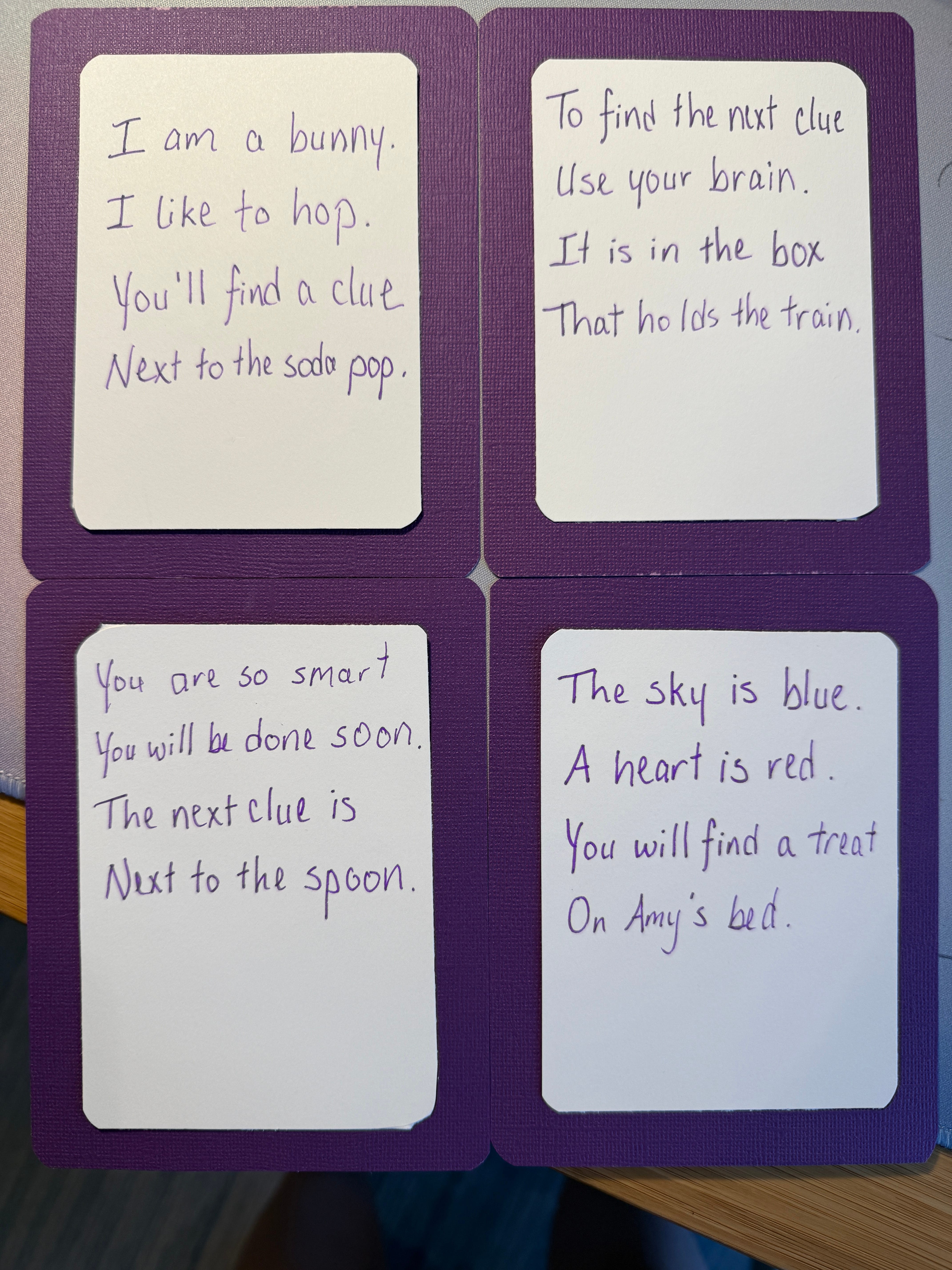
CoPilot gave me some excellent suggestions that I saved to explore next week. Then I turned on the South Carolina-Connecticut women’s basketball game and turned my attention to preparing for an Easter visit from a 6-year-old friend. I wrote rhyming clues to point the way to some Easter goodies just like Mom did for me, and I did for my kids. I’m sure that AI could have generated clues in a few seconds, but writing the rhymes gave me time to think back on past Easters. I used a punch to create rounded corners and mounted the clues on paper that coordinated with the color ink I used. It was a perfect analog end to the day.
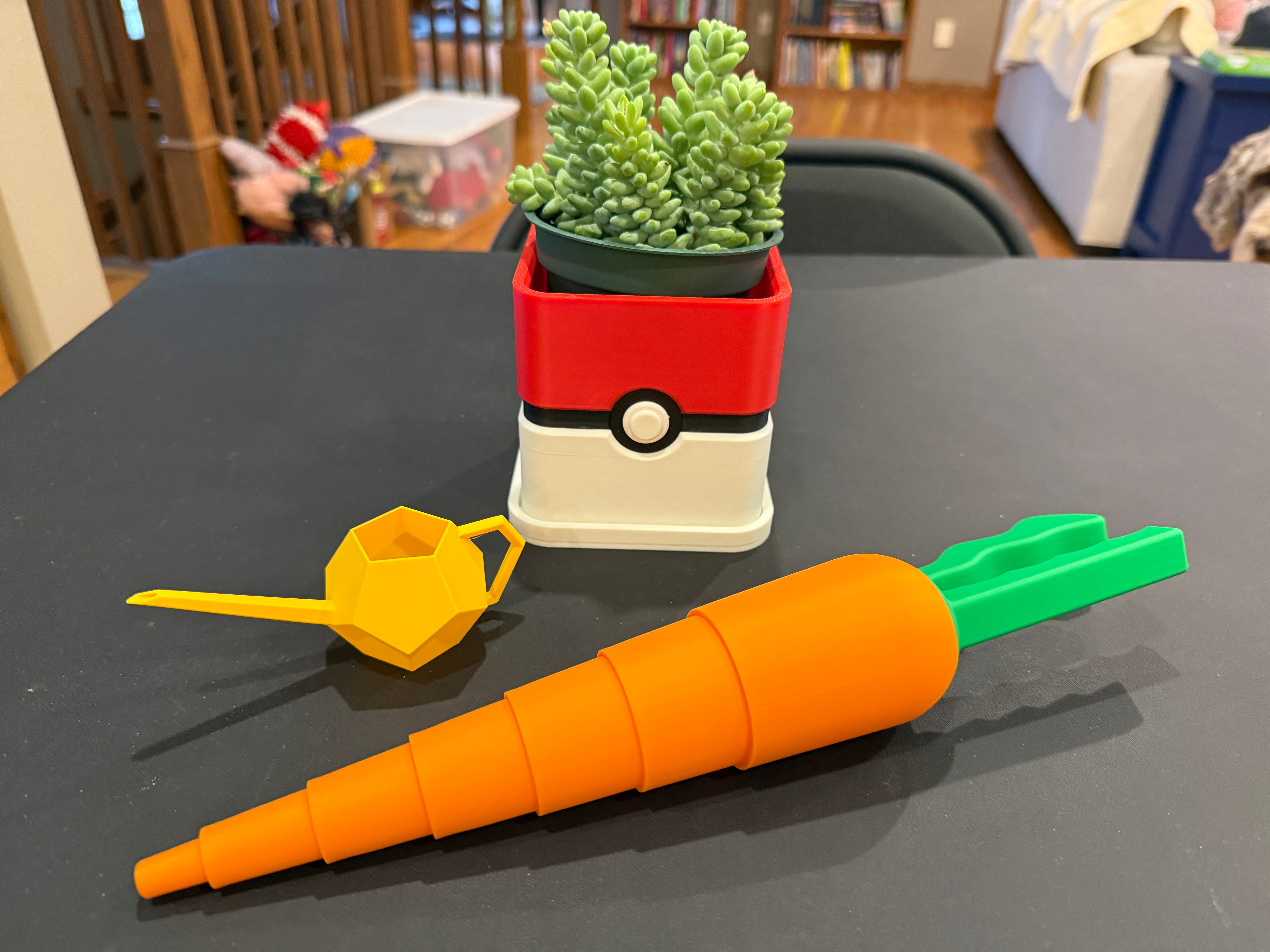
That seemed like a nice, neat ending to this essay until I began setting out the other Easter treats. Mike used his 3D printer to create planters that look like Pokemon balls and a carrot sword that unfurls with a flick of the wrist. A little technology, a little analog. Another both/and solution.
Both/and is a gem I'll keep in my head!!
Vinyl records, real books and frequent fishing trips --- helps keep the brain fresh!
Great column this week Amy.