
Bearing Witness
Watching the Oscar-Nominated Documentary Shorts

The lights dimmed. The sold-out audience grew quiet. The names appeared on the screen:
All the Empty Rooms
Armed Only with a Camera: The Life and Death of Brent Renaud
Children No More: “Were and Are Gone”
The Devil is Busy
Perfectly a Strangeness
My friend Erin and I went to see the Oscar-nominated documentary shorts at FilmScene a couple of weeks ago. Our fascination with the doc shorts started last year, when someone invited Erin to this annual FilmScene event. When she shared how impactful, even moving, they were, I searched them out and watched them one by one. I even went back and watched some from previous years. Crystallizing major issues - the death penalty, school shootings, educational cultures - in 40 minutes or less, when done well, doesn’t feel impoverished, but expansive.
As we talked more about the 2025 doc shorts, Erin kept returning to the power of seeing them back-to-back, all in one gulp. FilmScene, our local non-profit movie theater, shows all of the Oscar-nominated shorts - animated, live-action, and documentary - every year. This year, we reserved our tickets to the doc shorts a couple of weeks in advance, and I watched them on the big screen side by side with other theater-goers.
The topics were heavy. I cried so much that I used up the travel pack of tissues in my purse and had to switch to popcorn napkins. A security guard at a women’s health facility in Georgia, a documentary filmmaker killed in Ukraine, a journalist visiting the rooms of children killed in school shootings, people holding pictures of children killed in Gaza with captions that read, “Were and Are Gone.” Even the one with the donkeys near an observatory. When Mike picked me up, he asked me what the films were about. War, violence, dehumanization, the unending march of time, I told him.
But that wasn’t quite true. Upon reflection, I’ve realized that the films were only indirectly about those topics. Instead, all were about bearing witness. They centered the people who stood by. The security guard at the women’s health facility accompanied women from their cars into the facility as protestors called them murderers. The documentary filmmaker spent 25 years witnessing the horrors of war and the danger faced by refugees. The journalist, who had reported on the school shootings that have occurred one after another until they have become not distinct events, but parts of an annual total, went to houses where parents had kept their children’s rooms just as they were when they left them one morning, never to return. The protestors in Israel stood silently, holding pictures of children - not the images that captured their death, but the images that captured their lives. Silly, serious, beautiful, joyful, bursting with potential.
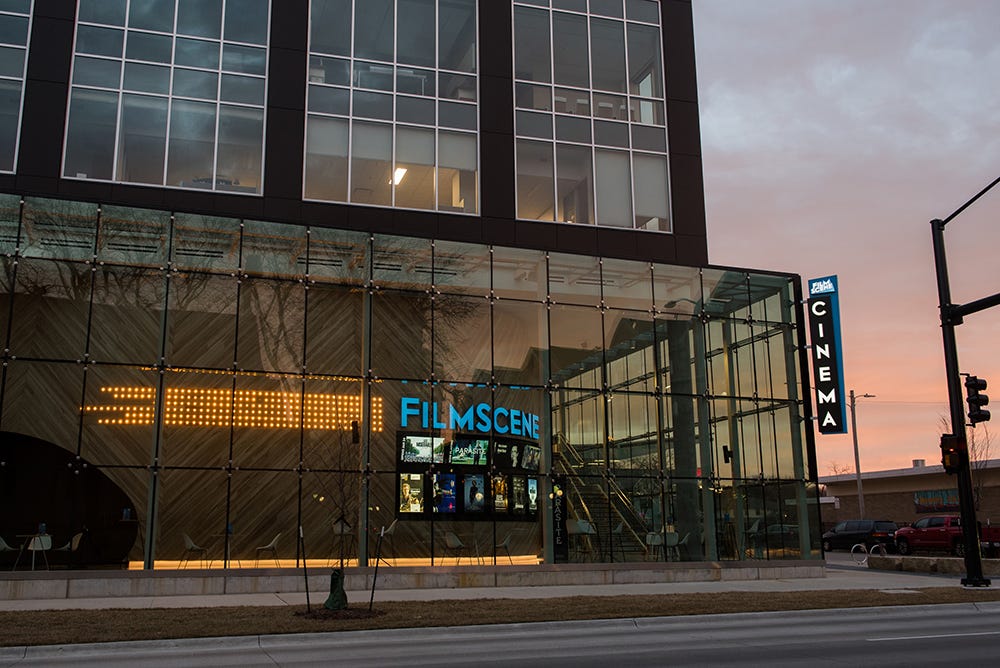
Photo credit: FilmScene website
Is this honorable work, this bearing witness? The films are uninterested in that basic question. Instead, they show the complexity of bearing witness. Before her shift begins, the security guard calls someone who prays with her, asking God to keep everyone safe. We see the documentary filmmaker growing up without many friends except his brother, who travels to retrieve his body. The photographer who takes pictures of the children’s rooms, centering on objects that now bear responsibility for holding their stories, also takes a picture of his daughter every morning as she leaves for school. The protestors in Israel encounter protestors who are advocating for Israeli hostages to be returned, and continue to stand in silence.
While the films are about bearing witness, they also do the work of bearing witness, of capturing the moments, editing them together, and saying insistently to audiences, “You must witness too.” The filmmakers use their skills to put these events together in such a captivating way that we cannot be distracted by the spring flowers that are emerging, the joy of spring break, or the small hassles in our own lives. They supersede our pre-existing narratives, using image and story to challenge our assumptions. They allow us to see that events happening a thousand miles away, in the next state, or in another neighborhood, are as real as those happening in our own lives.
In the past week, several of my friends have experienced difficult events in their own lives. My inclination is to try to help, to do something to relieve their suffering. That inclination is planted deep within me, a seed passed down by a long lineage of strong women who tended gardens during the Great Depression, raised babies alone as their husbands went to war, and comforted spouses through unexpected losses. But as I reflect on those women - the women I called Mom, and Grandma, and Granny - their strength often revealed itself through bearing witness - hearing the painful stories, pulling those who were hurting in close, standing beside them, and eventually walking them home. Perhaps that is now my role, too, in this difficult season.
I just queued up The Last Repair Shop to watch with my husband this evening. Looking forward to it. Always happy for a good steer. thanks.
We watched a doc about the journalist Seymour Hersh a couple days ago. Worth it, but sure does reinforce that our lives in this time expose us to so much. Keep going and know that life is hard, but worth the doing.
So much to think about. Thank you. I will keep my eyes open for tickets next year.