
Lilith Fair
Progress Always Finds a Way

Music has always been a big part of my life - from eight-tracks and record albums as a kid, to cassettes in the stereo of my first car, CDs on repeat through graduate school, and digital playlists covering the past 15 years. Songs are a time machine, taking me back to the moments when they intersected with my life.
At times, music existed only in the background of my life. Rather than curated mix tapes or playlists, I listened to what was on the radio, developing relatively shallow relationships with the songs and the artists. The late 1990s were one of those periods. I was working a full-time job as an internal auditor at Saint Louis University, taking master’s classes part-time in the evenings. I was newly married and navigating life in a bigger city than I had ever lived in. When I think about that time, I remember meeting myself coming and going.
Even so, I was aware of Lilith Fair, the all-female music festival that toured from 1997 through 1999. Lilith Fair drew my attention for several reasons. First, it was phenomenally popular. Artists like Sarah McLachlan, Paula Cole, Tracy Chapman, Sheryl Crow, and the Indigo Girls were streaming up the charts. They each had fan bases, but together they drew huge crowds. Gradually, Lilith Fair brought in more diverse artists and styles, with Missy Elliott, Emmylou Harris, and India Arie taking the stage.
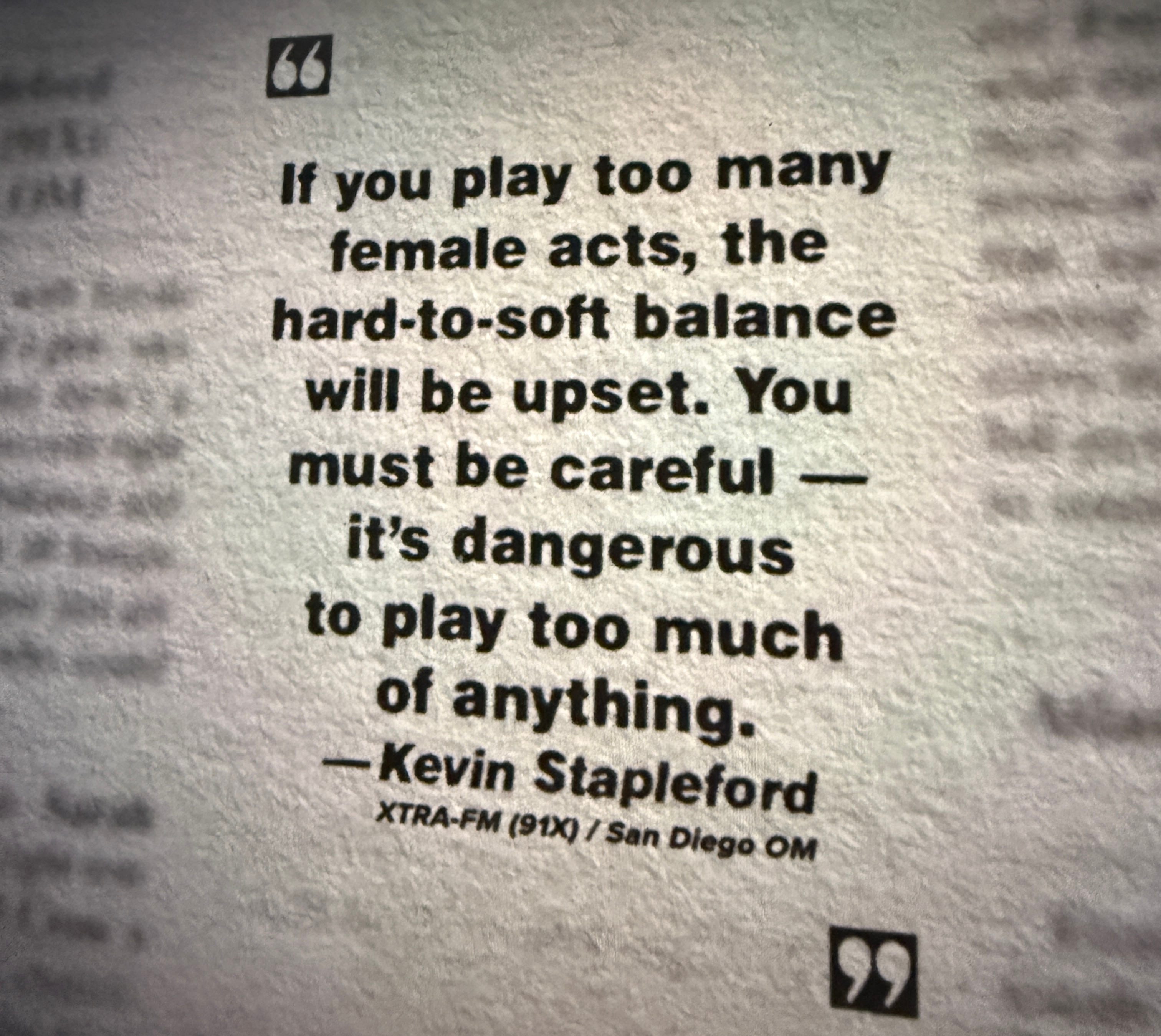
It was unheard of to have an entire music festival of women artists at that time. Radio stations would not play songs by female artists back-to-back. Into this climate, Sarah McLachlan brought Lilith Fair. She invited other female artists to join her on the road. They created a community. They supported and celebrated one another. They sang the final song of the night together, perfecting beautiful harmonies, bringing to life the spirit of communion created by their namesake Lilith, Adam’s mythical first wife, who left the Garden of Eden and went to a place where women sang and danced together. Lilith Fair created a metaphor of what the artists believed society could become.
Lilith Fair also created a space where audiences felt safe. In the 2025 documentary, Lilith Fair: Building a Mystery, Brandi Carlisle shares her experience attending Lilith Fair and finding a place where she could be herself, an oasis in stark contrast to her high school, where she was the only openly lesbian student. Lilith Fair also supported women in the communities where they played. Donations to women-focused charities spread the movement beyond the festival venues.
Of course, I was aware of Lilith Fair. But I didn’t attend - maybe because we were just starting out and didn’t have a lot of money, maybe because I didn’t need Lilith Fair as much then as I need it now. I was raised by a strong woman who was raised by a strong woman. I rarely heard, “You can’t do that.” I had started my career in public accounting, a male-dominated industry at the time, but I was good at my job. I was professionally, if not socially, confident. I had an optimistic view that the world was becoming increasingly fair.
Lilith Fair was an example of women creating their own systems to push back on inequitable norms in the music industry. They were met with misogyny and homophobia, but they responded together. The documentary shows numerous press conferences in which the artists performing at Lilith Fair sat behind a row of microphones, answering pointed questions and backing one another up, just as they did on stage. In 1999, when they played their last show, they were leaving fans wanting more.
While Lilith Fair made a mark, male-dominated systems in the music industry persisted. In 2010, Lilith Fair attempted a comeback, but it was unsuccessful. Music had changed, as had society. It was not possible to re-create the magic. I can’t help but wonder what would happen at Lilith Fair 2026. Women’s rights have once again taken a step backwards. The Lilith Fair documentary draws an optimistic conclusion: progress always finds a way. I hope so. Personally, I could use some of the feminine energy that emanated from the harmonies and hearts of the artists at Lilith Fair.
Interesting to me how many of those songs, by the writers you cite, come back to me as "ear worms". There's still so much to chew on from those times, thanks.
My friend & I took our college-aged daughters to Lilith Fair at Canterbury Park outside Shakopee, MN in August 1998. I’d been at Iowa State during the 2nd Feminist Awakening & wanted my daughter to see women at a new forefront of all female festivals.