
Mentoring Philosophy
Or, how to support others' becoming

I spent a little over an hour on Tuesday evening sitting on the stage at Hancher Auditorium learning about the winners of the University of Iowa’s faculty and staff awards. This is an exercise in humility. From the staff who provide legal support for students to the researchers who have been awarded hundreds of millions of grant funding to a Guggenheim Fellow in photography, each award winner was more impressive than the last. The awards provide evidence of what the university values - excellent teaching, research, outreach, and patient care that make a positive impact on Iowa and beyond.
I received one of two University of Iowa Distinguished Mentoring Awards from the Graduate College. As I’ve noted before, mentoring is one of the most rewarding parts of my job. Our PhD director, Chad Van Iddekinge, coordinated my nomination. Madison Mucci-Ferris, a current PhD student, and Jordan Nielsen, a PhD alumnus who is now an Associate Professor at Purdue University, wrote letters of support. And I was given one page to summarize my mentoring philosophy.
This may have been the first time that I’ve put my mentoring philosophy into words. My philosophy is informed by research evidence. For example, Professor Kathy Kram’s research identifies a range of mentoring functions to help mentees advance in their careers and to build strong, supportive relationships. I’ve also learned a lot from my own mentors, and my approach has developed over time.
So, who am I as a mentor? Here’s my philosophy:
As a management professor, I research strategies that help employees do well and be well at work, which informs my approach to mentoring PhD students. Students know I am here to help them succeed and thrive. I have a regular cadence for checking their progress and well-being (weekly meetings and at the beginning and end of each semester). I also strive to build trusting relationships, so students feel safe coming to me anytime they face challenges. We celebrate big and small accomplishments and strategize about how to address challenges, normalizing both.
To support students’ development, I help them set both learning and performance goals each year. Although we have program milestones for all students, my goal-setting process is individualized to help each student develop their own interests and passions. I am curious, so I find joy in exploring new areas alongside my students and watching them grow into distinct and capable scholars. I also connect students with other researchers and academic communities by encouraging them to chair symposia, helping them network, and consistently showing my respect for them. My approach to mentoring shifts to meet students where they are. Each year builds on the last until students are on the job market with the skills and resources they need to begin a productive career.
A PhD program is a marathon, and a lot of life happens in those five years. My students have faced significant health issues, lost parents, and become parents themselves. I provide not only instrumental support, but also psychosocial support. Supporting the whole person allows me to form close relationships with Ph.D. students that last for years after they graduate. Students I mentored early in my career support my current students, creating a family of sorts.
I also support all PhD students in my department and the college by teaching a doctoral seminar, serving as an informal resource, and advocating for policies that help them achieve their goals. I introduce pre-PhD students to research, help applicants assess their fit with the program, and ensure new students are oriented to our program and community. I can think of no greater impact than developing the next generation of management scholars.
But here’s the thing about a philosophy. It’s a goal. It’s how I would like to mentor. It’s who I am on my best days. I was gratified that my students’ letters talked about times when I lived up to my philosophy. But it’s also true that sometimes, I give advice that doesn’t work out. Sometimes, I miss deadlines. Sometimes, I don’t live up to my ideal mentoring self. This is why mentoring relationships should be built on trust and reciprocity. I let my students see my opportunities for development, which helps them feel comfortable sharing theirs.
One of my students described me as someone who “co-navigates the doctoral journey with intention.” I love this. I don’t have all the answers, but I want my students to know that we are in this together. I am here to support their goals and help them become the best version of themselves.
So when fifth-year PhD student Ah Jung Kim, who recently defended her dissertation, came to the awards event with a crown, a sash that read “Queen,” and a sign that UI President Wilson complimented from the stage, I told her, “I couldn’t have done this without you.” And that is true on so many levels. An effective mentoring relationship is reciprocal. I have learned as much from my students as they have learned from me. They keep me current. Their enthusiasm is contagious. They model persistence. And as our relationship develops, they support me as well. I hope they learn that no one does this alone. I hope they know I’ll always be there to cheer them on and to marvel at who they are becoming.
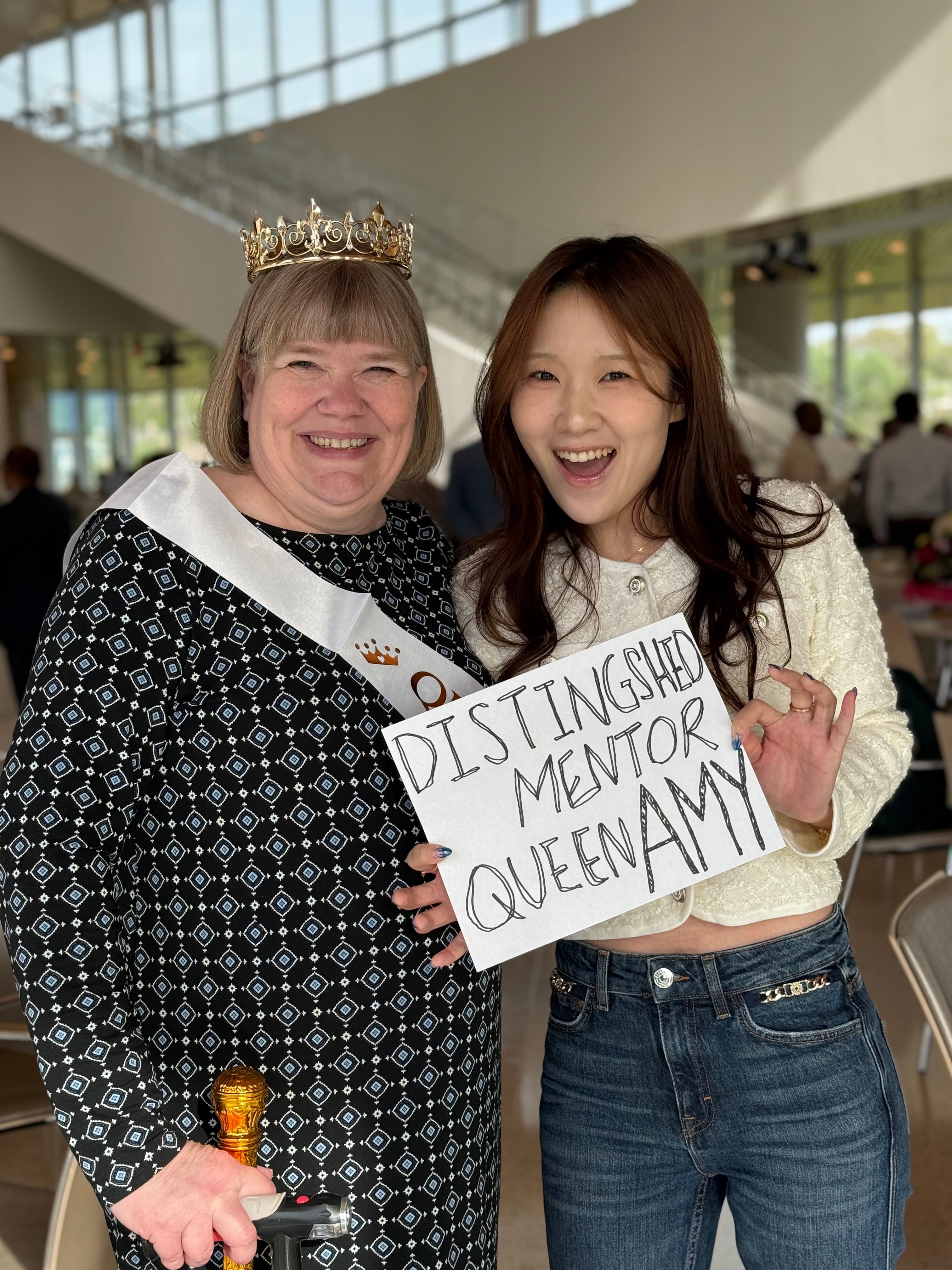
Long live the Queen!!
Big congratulations! More than well deserved!